Christmas tragedy at Prestwick (Part 1)


At 3:30 a.m. on Christmas morning, 1954, a Boeing 377 Stratocruiser registered as G-ALSA by British Overseas Airways Corporation (BOAC) and romantically named Cathay, crashed on landing at Prestwick, Scotland. Twenty-eight of its 36 passengers and crew died — 16 men, 10 women, and two children.
Newspapers trumpeted the story in banner headlines and, for a few days, filled their columns with heart-wrenching photographs and stories.
Seven of the eleven crew members, including the pilot, Captain William L. Stewart, survived. Every passenger but one died: Harry Russell, a BOAC director, was sitting across from a section of the airplane’s fuselage which split open and he was thrown clear.
Among the dead were two young girls; in a tragic tableau, one of them was found with her arms around her mother’s neck.
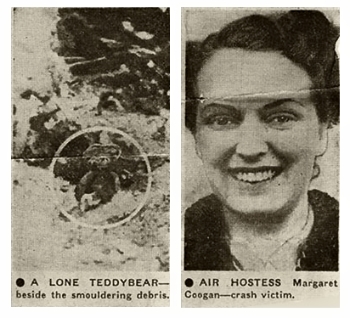
A severely injured stewardess, Margaret Coogan, was pulled from the wreckage by Prestwick Airport’s Leading Fireman James Smith, but died before she could reach hospital.
The flight originated at Heathrow Airport in London. It was scheduled to continue on to New York City from Prestwick, with a fresh crew. Twenty-one of its 25 passengers were to deplane at Prestwick.
A Prestwick Sunday Express Reporter clipping provides additional details of the crash.
Months later, crash investigators would place blame primarily on the pilot and co-pilot. While most people had forgotten the tragedy, its few survivors and their families and friends would never forget, nor would emergency workers, journalists, and even people whose lives became entwined in it years, even decades, later.

Fatal airline crashes have always grabbed headlines, but now, in the 21st Century, they are almost as rare as unicorns. Not a single fatal accident on Western-built jet airliners in scheduled passenger service occurred in 2023. Some fourbillion passengers flew that year, and they all landed safely at their destinations. Not necessarily on time, or comfortably, or with their luggage, but safely.

A WWII bomber begets a peacetime airliners
The Stratocruiser descended from the famous (or infamous) Boeing B-29 Superfortress bomber, which wreaked havoc on Japan in the last years of the Second World War, with devastating fire-bomb attacks on its major population and industrial centres, then with the world’s forever-controversial use of the atomic bombs dropped on the Japanese cities of Hiroshima and Nagasaki.
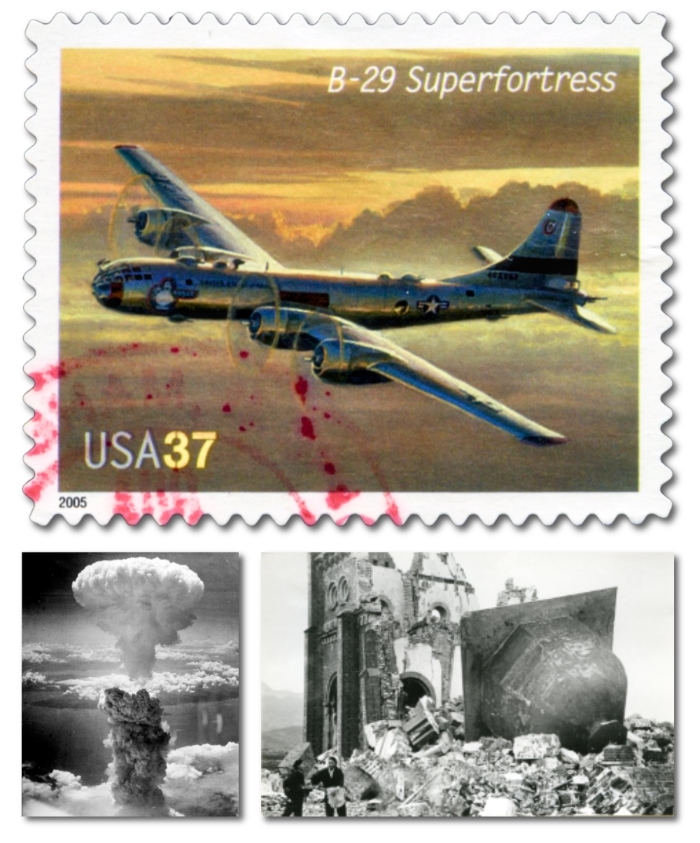
The B-29’s complexity was famous (or, again, infamous) from an engineering point of view. It was the most technologically complex aircraft ever built, incorporating pressurized crew compartments, remote-controlled gun turrets, and the Wright R-3350 Duplex Cyclone, the most powerful piston engine then available. Yet that complexity resulted in a deeply troubled aircraft. Its engines ran extremely hot and frequently caught fire. It killed more American aircrew during its development and early operations than Japanese action did. In an early test flight in Seattle, the aircraft crashed, killing the crew of 10 and 21 people on the ground.
The C-97 Stratofreighter
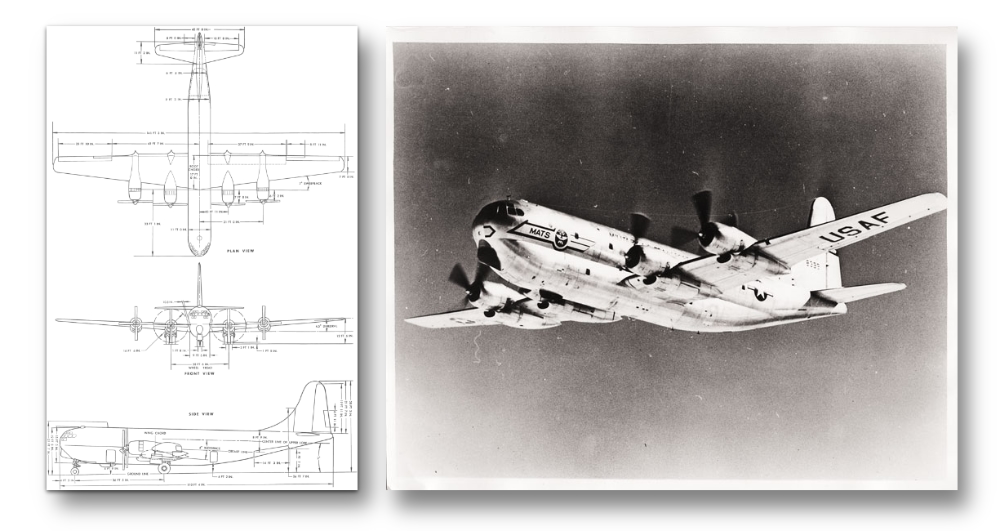
The military soon realized the potential of applying the B-29’s technological innovations to a new aircraft that would carry large loads of freight. Their vision resulted in the C-97 Stratofreighter, which entered regular service in 1947. The Stratofreighter married the B-29’s long cylindrical fuselage to a bulbous upper fuselage, giving the new aircraft an “inverted-figure-8” shape in cross-section. The first few Stratofreighters used the same Duplex Cyclone engines that powered the B-29; predictably, they caught fire just as they had on the B-29. Most subsequent versions of the C-97 used Pratt & Whitney Wasp Major Engines, which produced 60 per cent more horsepower than the B-29’s Duplex Cyclones, but they too proved to be chronically unreliable. The KC-97 Stratofreighter was a version of the C-97 designed for use for aerial refuelling. It went into service in 1950 and did much to “fuel” the Cold War between the United States and the Soviet Union.
The B-377 Stratocruiser
Just as the B-29 bomber begat the C-97 Stratofreighter, the C-97 Stratofreighter begat the B-377 Stratocruiser. The Stratocruiser, which first flew in 1947, inherited the B-29's revolutionary, pressurized-fuselage technology and some of the Stratofreighter’s mechanical temperament. Its Wasp Major engines, the same engines that were used on the Stratofreighter, were the most powerful piston engines ever fitted to a production airliner, but they proved to be just as chronically unreliable in commercial service as they had been in military service, with propeller-feathering failures causing several fatal crashes.
With two decks and a pressurized cabin (a relatively new feature in airliners — the first was the relatively unknown Boeing 307 Stratoliner — the Stratocruiser set a new standard for luxurious air travel with its tastefully decorated, extra-wide passenger cabin and gold-appointed dressing rooms. A circular staircase led to a lower-deck beverage lounge (let’s call it a bar), and flight attendants prepared hot meals for 50 to 100 people in a state-of-the-art galley. The Stratocruiser was equipped with 28 upper-and-lower bunk units.
Despite its technical problems, the Stratocruiser was popular with the travelling public, at least the wealthy travelling public. In 1954, the average weekly wage for Britons was roughly £8 to £10. Booking a tourist class return flight from London to New York and return would cost a prohibitive £180 to £200, equivalent to at least four months’ pay; in 1954, the average weekly wage for Britons was roughly £8 to £10.
Despite its technical problems, the Stratocruiser was popular with the travelling public, at least the wealthy travelling public: Booking a tourist class return flight from London to New York and return would cost a prohibitive £180 to £200, equivalent to at least four months’ pay at a time.
It’s instructive that a first-class passenger travelling from Southhamptom to New York City on RMS Mauretania or RMS Olympic in the 1920s would probably have paid around £50 for a one-way ticket. (The concept of a return ticket would have been foreign to travellers at that time. Tidal conditions at Southampton, the principal British terminal, meant that the largest vessels could only safely navigate its approaches at certain states of the tide, making departure times partly a matter of nature rather than choice. Weather forecasts would have been more accurately called weather guesstimates.)
Trans-Atlantic passengers booked individual crossings as needed — a wealthy American might cross to Europe in spring, spend three months touring, and return in autumn on whichever ship suited their schedule. The sailing schedules of the great transatlantic liners had little to do with passenger convenience. Tidal conditions at Southampton, the principal British terminal, meant that the largest vessels could only safely navigate its approaches at certain states of the tide, making departure times partly a matter of nature rather than choice. Mail contracts were equally influential: the great shipping lines competed fiercely for lucrative government agreements to carry Royal Mail and United States Mail, which rewarded speed and reliable frequency of service — making the timetable as much a commercial obligation as a matter of passenger convenience. Competition between Cunard, White Star, and the German lines maintained frequent sailings regardless of season, while in spring, ice conditions pushed the standard routing further south to avoid the Newfoundland iceberg season — a precaution RMS Titanic met famously underweighted.
Tourist class was somewhat less, perhaps £180 to £200 return, but still prohibitive for most people. And the luxury that they were paying so dearly for wasn't all that luxurious, compared to what they might have been treated to, for a lot less money, on the famous, fast ocean liners of the early 20th Century. A first-class passenger on ‹em> Titanic in 1912 would have paid £100 for his or her passage to New
The Stratocruiser experience came first-class and tourist-class tickets — but in the early 1950s transatlantic air travel was so expensive that it was firmly in the domain of the wealthy, the powerful, and those travelling on business or at government expense. What’s surprising is that the generation of travellers in the early 20th Century could cross the Atlantic in greater luxury for a lot less money than they would spend on a unlike the cost of a luxurious Atlantic crossing on the fast, famous ocean liners of the first half of the 20th Century. A return, first class transatlantic fare in the mid-1950s was in the region of £400 — a sum that represented several months' wages for an average British worker at the time. Although flying in tourist class was about half that of first class, but still prohibitively expensive for most people. To put it in perspective, the average weekly wage in Britain in 1954 was roughly £8 to £10, meaning a tourist class return ticket cost the equivalent of four to five months' earnings.
That Stratocruisers two decks and pressurized cabin (a relatively new feature in airliners — the first was the relatively unknown Boeing 307 Stratoliner — the Stratocruiser set a new standard for luxurious air travel with its tastefully decorated, extra-wide passenger cabin and gold-appointed dressing rooms. A circular staircase led to a lower-deck beverage lounge (let’s call it a bar), and flight attendants prepared hot meals for 50 to 100 people in a state-of-the-art galley. In its sleeper configuration, the Stratocruiser was equipped with 28 upper-and-lower bunk units.
By the end of 1949, four airlines had purchased Stratocruisers, BOAC among them. The airline offered regular transatlantic service from London to New York City. G-ALSA was one of the new BOAC Stratocruisers; the aircraft was featured in the opening scenes of Home to Danger, a 1951 British film noir crime movie directed by Terence Fisher.

The B-377 was larger and had greater range than the competing Lockheed Constellation and Douglas DC-6, but was slower at cruising altitude and more expensive to buy and operate. And it suffered chronic problems with its Pratt & Whitney Wasp Major radial engines and their four-blade propellers: three Stratocruisers crashed following loss of power, propellers, and even engines.

Production ended in 1950 after only 55 Stratocruisers had been built. (The Stratofreighter and its military derivative, the KC-97 aerial tanker, were more successful, with a total of 888 aircraft built.)
Next, in Part 2: Crash investigators blame pilot Captain William L. Stewart for the crash of BOAC Stratocruiser G-ALSA. However, aviation disasters rarely result from just one person’s actions. Malcolm Stewart, Capt. Stewart’s son, explains how the crash unnecessarily ruined his father’s career and brought grief to his family.